A few years ago, a drone spraying a paddy or cotton field in India was a demonstration that drew a crowd. Now it's a scheme with a budget line. The government has put real money behind agricultural drones, and the way it's doing it says a lot about how the market is likely to grow.
Namo Drone Didi
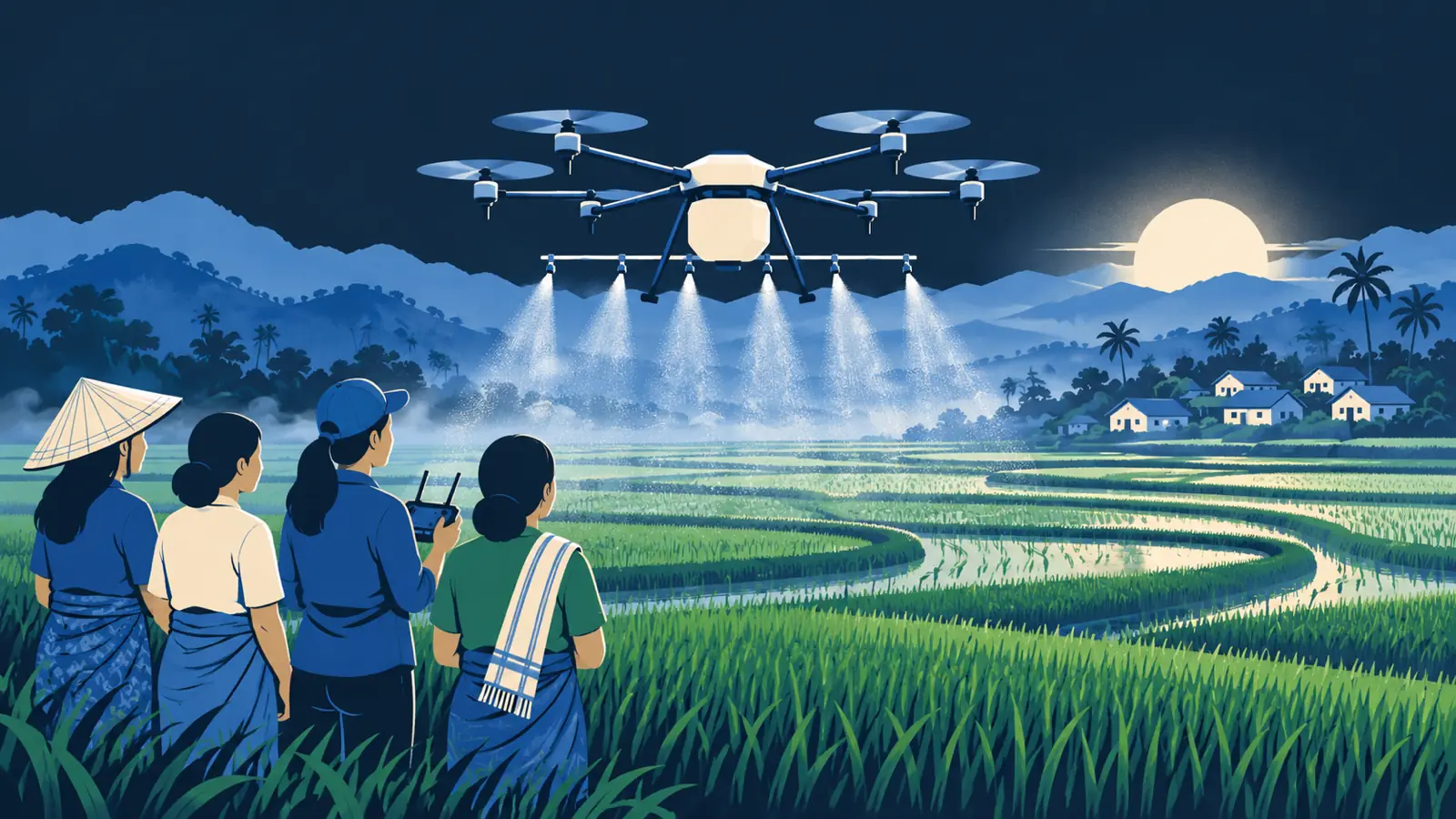
The biggest single push is Namo Drone Didi, a central scheme that puts drones in the hands of women's self-help groups (SHGs) so they can offer spraying as a paid service to farmers. According to the government's operational guidelines, it has an outlay of ₹1,261 crore for 2023-24 to 2025-26 and aims to provide 15,000 drones.
The support is generous. Selected SHGs get central assistance covering 80% of the drone package cost, up to ₹8 lakh. The package includes training too: 15 days of drone pilot training for one member and 5 days of drone assistant training for another. The first 500 drones were to be procured by lead fertiliser companies from their own resources, with the rest following over the next two years.
The idea behind it is a service model. Most Indian farms are small, and few farmers will buy a drone outright. A local group with a drone that sprays many farms for a fee makes the economics work for everyone.
Kisan drones under SMAM
The second route runs through the Sub-Mission on Agricultural Mechanization (SMAM). Here the support depends on who's buying. Under the published norms, ICAR institutes, Krishi Vigyan Kendras and state agricultural universities can get 100% of the cost up to ₹10 lakh per drone for demonstrations, and farmer producer organisations up to 75%.
For buyers who plan to offer services, custom hiring centres run by cooperatives, FPOs and rural entrepreneurs can get 40% of the cost up to ₹4 lakh, and agriculture graduates setting up such a centre can get 50% up to ₹5 lakh. Individual small and marginal, SC/ST, women and North Eastern farmers are eligible for 50% up to ₹5 lakh, and other farmers 40% up to ₹4 lakh.
Rates and eligibility do change, so check the current SMAM guidelines with your state agriculture department before you budget around a specific figure.
OUR LABWe build our own autonomous drone.Explore the product →
What holds adoption back
Subsidies solve the price of the drone. They don't solve everything else.
Drones have to meet India's certification rules, and subsidy schemes generally expect certified models, which narrows the choice. Pilots need training and a licence. Spraying needs the right formulations and doses for aerial use, and farmers need to trust that a few minutes of flying does the same job as hours of manual spraying.
Then there's the practical side: batteries and spare parts in rural areas, repair skills close to the field, and enough work across the season to keep a drone earning. The service model helps here, because one well-run drone business can spread those costs over many farms.
Where this goes next
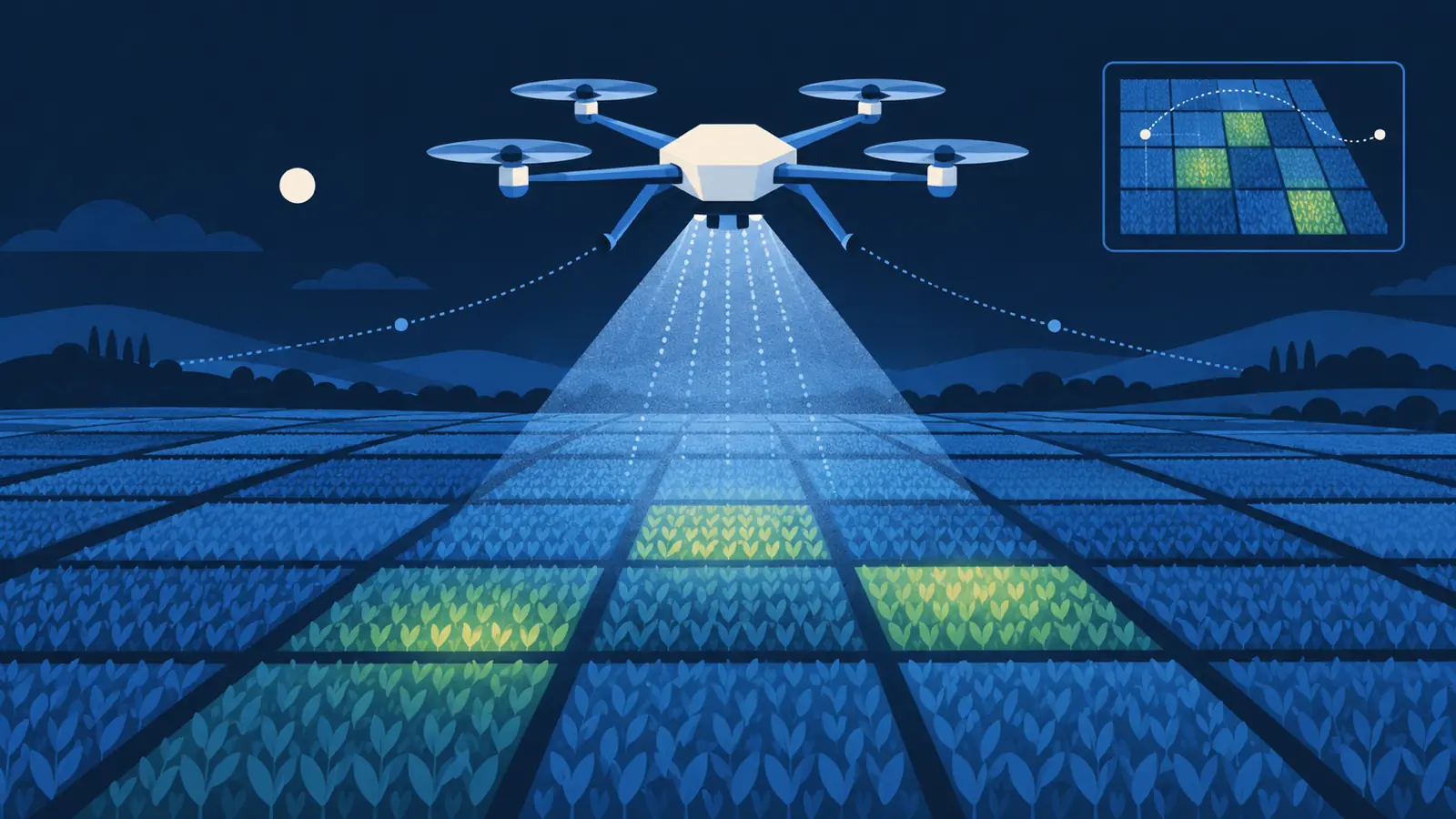
Spraying is where the money is today, because it saves labour and chemicals and reduces farmers' exposure to pesticides. The next step the industry talks about is moving from spraying everything evenly to spraying only where it's needed, which depends on seeing the crop clearly first. That brings imaging, mapping and on-board AI into the picture, and it's where much of the engineering effort around the world is now going.
Why we follow this
At Ryo Forge, our lab works on autonomous agricultural systems, edge AI and computer vision, so India's drone policy and the shape of this market matter to us. See what we work on in the lab, or read our piece on why rice blast is still so hard to control.
Sources
- Press Information Bureau. Operational guidelines of the Central Sector Scheme Namo Drone Didi.
- Press Information Bureau. Sub-Mission on Agricultural Mechanization, on financial assistance for Kisan drones.
- Press Information Bureau. Nearly Rs. 127 crore released for Kisan Drone promotion, on assistance for individual farmers.