SAP Sapphire 2026 took place in Orlando on 13 and 14 May, and almost every announcement came back to one idea SAP calls the Autonomous Enterprise: AI agents, built around Joule, doing more of the routine work inside SAP. Nearly two weeks on, the question we keep getting from SAP teams is a practical one. What changes for us, and what should we do about it this year?
What SAP announced
The headline for anyone who builds things was Joule Studio, announced on 13 May. SAP describes it as a fully managed offering for building and running AI agents, apps and workflows on the SAP Business AI Platform. A few details stand out:
- You describe what you want in plain language, and Joule Studio drafts a requirements document, technical specifications, code scaffolding, tests and a live preview.
- Developers can take that output into their own tools, such as Visual Studio Code or Cursor, and work with frameworks like LangChain, Pydantic AI and LlamaIndex.
- Agents run in a managed runtime, each in an isolated sandbox, with long-term memory stored in SAP HANA Cloud.
- Governance sits in a separate pillar of the platform, including SAP's AI Agent Hub.
- Design-time access, including the AI-assisted development, is free for SAP customers and partners until the end of 2026, within fair-use limits.
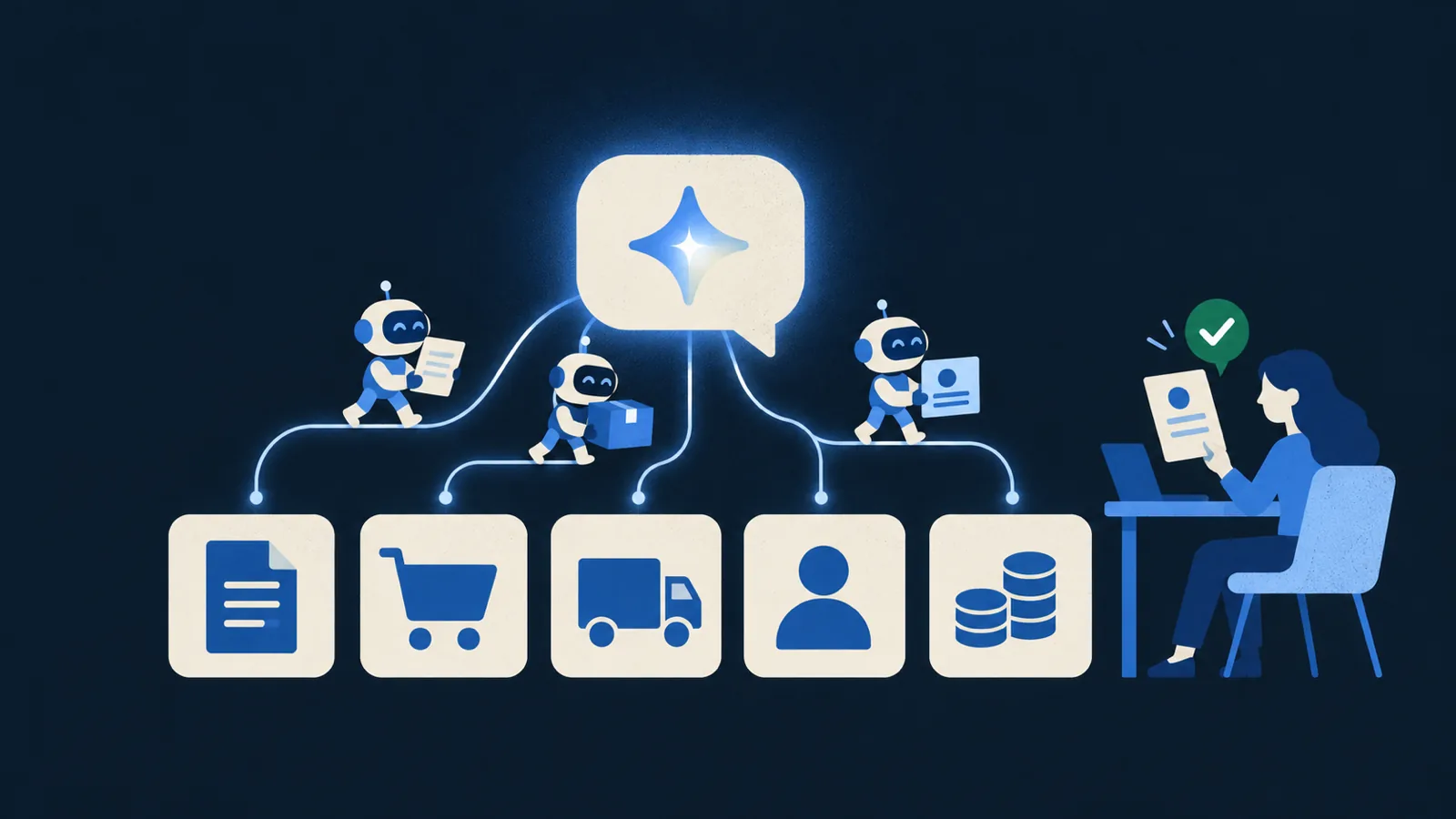
SAP also showed Joule agents and assistants across finance, supply chain, procurement, HR and customer experience. Some are available now and others are on a roadmap, so check the status of anything you're counting on before you plan around it.
What it means for a typical SAP customer
For most companies, the near-term change is that SAP's own agents will start appearing inside standard processes, and Joule becomes a more common way into the system. That's useful for work that sits entirely inside SAP and follows SAP's standard process.
Three things are worth checking before you get excited:
- Which release and edition you're on. A lot of the new capability assumes a recent S/4HANA cloud setup. Companies still on ECC, or on heavily customised systems, will see less of it.
- How licensing works for your contract. Free design-time access isn't the same as free runtime, so ask how agents will be charged once they're in production.
- Whether your data is ready. An agent that reads messy vendor or material data will make confident mistakes faster than a person would.

Where custom agents still fit
SAP's agents are strongest where the whole task lives inside SAP. Real processes rarely do. An invoice arrives as a PDF in a shared inbox, someone checks it against a purchase order, chases a missing approval in email, and only then posts it in SAP. That's exactly where a custom agent helps: reading the document, matching it to SAP data through released APIs, preparing the posting, and handing it to a person to approve.
Custom agents also make sense when a process spans SAP and other systems, such as a CRM, a carrier portal or a bank, or when the rules are specific to your business rather than SAP's standard.
Guardrails before any agent touches SAP
The same rules apply whether an agent comes from SAP or from a partner like us:
- Give each agent its own account with only the access its task needs, read-only unless it truly must write.
- Keep a person in the loop for postings, payments and anything sent to customers.
- Log every action the agent takes, and review the logs in the first weeks.
- Test it with bad inputs and with instructions that try to push it past its job, before it goes live.
A sensible plan for 2026
- Pick one process with a clear cost, such as invoice intake or order status queries, and measure it today.
- Check what SAP already offers for it on your release before building anything.
- If SAP covers it, pilot SAP's agent. If not, build a small custom agent around SAP's released APIs, with an approval step.
- Use the free Joule Studio design-time period to let one or two developers learn the tools on a real use case.
How we help
We build AI agents and SAP apps, and we spend a lot of our time where the two meet: agents that read documents and emails, work with SAP data through APIs, and hand decisions to the right person. We also build the Fiori screens people use to review and approve what an agent prepares.
See how we build AI agents, see our SAP development services, or book a free call to talk through one process.